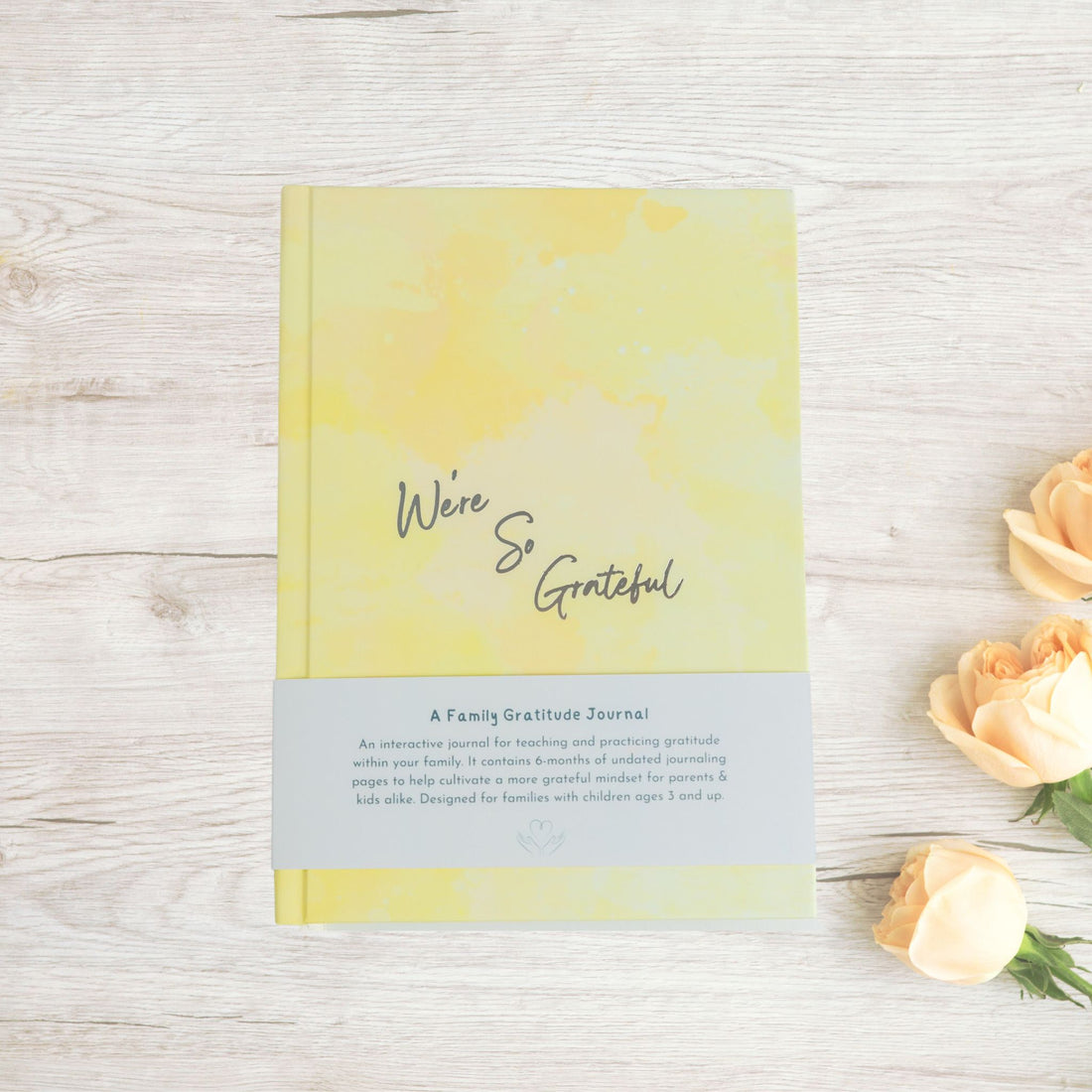
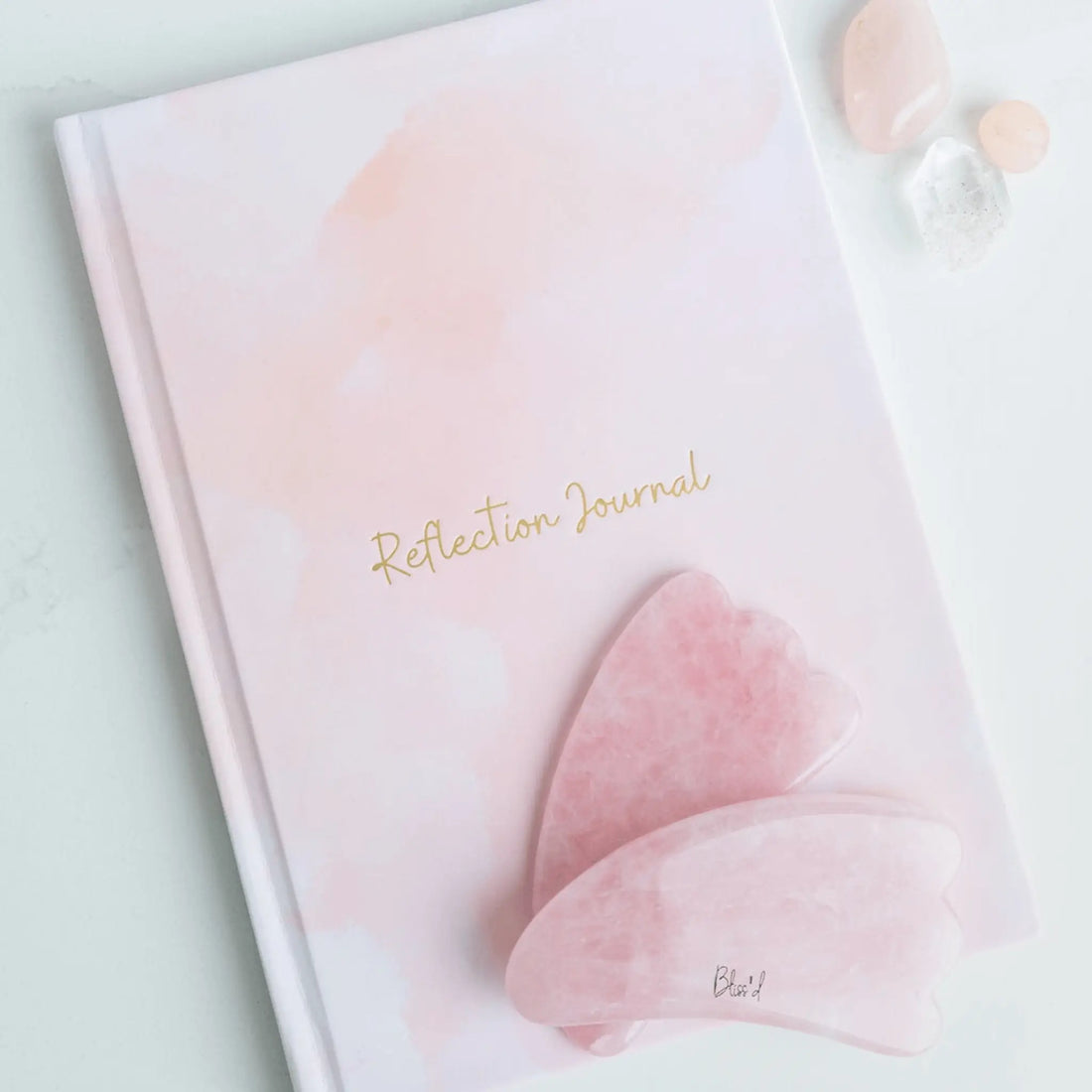
You already know journaling is good for you. You've probably started a journal at least once. Maybe more than once. You wrote in it for a few days, maybe a week, and then life happened — someone got sick, the schedule blew up, you missed a day and then felt guilty, and somehow the journal ended up in a drawer next to a dead pen and a grocery list from three months ago.
This is not a willpower problem. This is a design problem.
Journaling for moms fails for one reason almost every time: the version of journaling being sold to you was not designed for your life. It was designed for someone with uninterrupted mornings, minimal obligations, and the kind of quiet that simply does not exist when you have children.
So let's talk about what journaling actually looks like when you're a mom — and how to make it a habit that sticks for real this time.

Why Journaling Matters More When You're a Mom (Not Less)
Here's the paradox most moms live with: the season of life that demands the most from you is also the season where you're least likely to invest in yourself. You're giving constantly — to your kids, your partner, your work, your home — and somewhere in there, you disappear.
Journaling is one of the few practices that pulls you back to yourself. Not in a selfish way. In a necessary way.
When you journal consistently, a few things start to happen:
- Your anxiety decreases because you're processing thoughts instead of just cycling through them
- You get clearer on what you actually want — not just what everyone else needs from you
- You respond to your kids from a more regulated, grounded place instead of reacting from depletion
- You start to remember who you are outside of "mom"
None of this requires an hour. It requires five minutes and a format that actually works.
The Real Reason Most Moms Quit Journaling
It's not because you're not disciplined enough. It's because the common advice doesn't account for your actual constraints.
"Wake up an hour before your kids." — Okay, but they wake up at 5:30am.
"Create a sacred morning ritual." — Sure, right after I make lunches, find the missing shoe, and answer seventeen questions before 7am.
"Write three pages every morning." — Three pages. Every morning. I'm supposed to be fully coherent before coffee for that?
The bar being set is not for you. And when you inevitably can't clear it, you internalize the failure instead of recognizing that the bar was wrong.
Here's the truth: five minutes, three days a week, with a guided format is enough to change how you feel, think, and move through your life. The research on habit formation is clear — consistency matters far more than duration. A five-minute practice you actually do is infinitely more powerful than a thirty-minute practice you keep intending to start.
What Journaling for Moms Actually Looks Like
Forget the aesthetic. Forget the perfect pen and the sunrise and the steaming latte. Here's what it actually looks like in real mom life:
It's five minutes in your car after school drop-off. You sit in the parking lot before driving home. You open your journal. You write a few sentences. You go.
It's two pages at the kitchen table while your kids eat breakfast. Chaotic? Yes. Effective? Also yes.
It's the last thing you do before you turn off your light. A quick check-in with yourself after a long day. Not processing everything — just landing somewhere before sleep.
It's three sentences on a hard day. That counts. That is the practice.
The goal isn't a beautiful journal entry. The goal is the act of returning to yourself — consistently, even briefly, even imperfectly.

A Simple Journaling Framework That Actually Works for Moms
A blank page is your enemy when you're tired and stretched thin. The question "what should I write about today?" is enough to make you close the journal and scroll Instagram instead. This is why a guided format is everything.
The framework I built the Bliss'd journals around has four parts — and it takes about five minutes:
Thoughts & Things: A short brain dump. Whatever is in your head right now — good, bad, mundane, heavy — gets it out of your head and onto the page. This step alone reduces anxiety because you're externalizing the mental load instead of just carrying it.
Thankful & Grateful: Specific gratitude — not a list, but a moment. One thing you actually felt grateful for today. Specificity is what makes this work on a neurological level rather than just feeling like a checkbox.
Feel: How do you want to feel today — or how are you choosing to feel right now? This step connects you to your emotional state intentionally instead of just reacting to whatever the day throws at you.
Align: One thing you want to create, call in, or move toward. It can be small. "I want to feel more patient this afternoon." It can be big. "I'm building toward financial freedom for my family." Both count.
That's it. Four sections. Five minutes. Done.
And on the days you only have time for one section? Do that one. The Thoughts & Things brain dump alone — getting the noise out of your head — is worth doing every single day.
Journal Prompts for Moms (When You Don't Know Where to Start)
Sometimes you sit down and your mind goes blank. Here are prompts specifically for moms to get you moving:
For processing the mental load:
- What is taking up the most space in my head right now that I haven't let myself fully feel?
- Where am I giving from an empty cup — and what would actually fill it?
- What am I pretending is fine that isn't?
For reconnecting with yourself:
- Who am I outside of being a mom — and does she get any space in my life right now?
- What did I used to love doing that I've completely stopped? Why?
- What would I do with one hour that was entirely mine, no guilt, no to-do list?
For intention and manifestation:
- What do I actually want my life to feel like — not in five years, right now?
- What am I calling in for this week, this month, this season?
- What does the version of me who has already figured this out believe about herself?
For hard days:
- What is one thing that went right today, even if it was small?
- What do I need to hear from myself right now that I keep waiting for someone else to say?
- What would I tell my best friend if she was feeling exactly the way I feel right now?

How to Build a Journaling Habit That Actually Sticks
Habit research is consistent on this: new behaviors don't stick because of motivation. They stick because of design. Here's how to design your journaling practice to actually work:
Keep it visible. Your journal needs to live somewhere you'll see it every day. Nightstand. Kitchen counter. Your bag. Out of sight is out of mind, and out of mind means it doesn't happen. Put it somewhere that makes you think "oh right, my journal" at least once a day.
Stack it onto something you already do. This is called habit stacking and it's one of the most research-backed ways to build new habits. After your morning coffee. Before you check your phone at night. During school pickup. The new behavior borrows the automaticity of the existing one.
Lower the bar radically. Your minimum viable journaling session is two sentences. That's it. On a hard day, a chaotic day, an exhausted day — two sentences counts as a win. The goal is never to skip two days in a row, not to never miss a day. Missing one day is human. Missing two becomes a pattern.
Remove the guilt completely. You missed three days. So what. Pick up the journal and start again — no apology to yourself, no catch-up required, no "let me recap everything I missed." Just open to today and begin. Guilt about journaling is one of the top reasons people stop journaling. It is not a moral failing to miss a day.
Use a guided journal. Blank pages require energy you may not have. A guided format removes the friction of deciding what to write so that the only decision you have to make is whether to open the journal. Make it easier for yourself.
The Journals That Make This Easy
I built the Bliss'd journals because I couldn't find anything that worked for the season I was in as a new mom. Everything was either too rigid, too time-consuming, or too woo-forward to feel grounded. I needed something real. Something I could actually do at 6am with a baby in one arm.
Here's what I'd recommend based on where you are:
If you're new to journaling or restarting: The Magic Guided Journal for Beginners is exactly where to start. It's a 90-day journal built around the four-part framework above — Thoughts & Things, Thankful & Grateful, Feel, Align — with a pre/post emotion tracker so you can actually see yourself shifting over time. There's a prompt bank for when you need inspiration and complete freedom for when you don't. Five minutes. Three times a week minimum. Designed for real life, not a highlight reel version of it. $19.99.
If you already have a practice and want to go deeper: (more) Magic is the next level — a six-month depth journal that takes your daily practice and uses it intentionally for transformation. You'll work through five themed chapters: Worthiness, Receiving, Visibility, Expansion, and Embodiment. This is where you stop just reflecting and start actively rewriting the beliefs and patterns that are keeping you stuck. If you've been wondering why journaling feels good but isn't creating real change, this is the missing piece. $24.99.
If you're ready to commit to the whole journey: The Magic Journal Bundle includes both Magic and (more) Magic at 10% off — nine months of practice from building the habit to using it for deep, lasting transformation. If you're serious about this, start here.
One Thing Worth Naming
There's a version of this conversation where I tell you journaling will change your life and you just need to commit and show up and believe in yourself — and you walk away feeling motivated for approximately forty-eight hours before it fades.
That's not what I'm interested in telling you.
What I want you to hear is this: the reason you haven't made journaling stick isn't because you're not trying hard enough. It's because nobody designed the practice around your actual life. When you have the right format, the right container, and a bar that's set for reality instead of aspiration — you will show up. Not perfectly. But consistently. And consistently is all it takes.
Five(ish) minutes. Three times a week. That's the whole ask.
You can do that. And if you've been looking for a sign to start — this is it.
— Allie
P.S. If you're a mom who's also into manifestation, you might love this post too: Manifestation Journaling for Moms: The 7-Minute Practice That Actually Fits Your Life. And if you've been feeling stuck lately, this one might hit close to home: 50 Examples of Limiting Beliefs That Are Quietly Keeping You Stuck.