Why Gratitude Practices Matter for Kids (And Why Most Fail)
Here's what no one tells you: most gratitude exercises for kids are adult concepts dressed up in child-friendly language. When your 5-year-old says "I'm grateful for my family," they're often performing compliance, not experiencing gratitude.
Real gratitude in children isn't abstract—it's sensory, immediate, and tied to concrete experiences. A child feels genuine appreciation when they notice the warmth of sun on their face, not when they're asked to be thankful for "good health."
The science backs this up: children's prefrontal cortex—the part of the brain responsible for abstract thinking—doesn't fully develop until their mid-20s. Before age 7, asking kids to feel grateful for concepts like "opportunities" or "education" is neurologically premature.
But here's what does work: gratitude practices that match their developmental stage. When designed correctly, gratitude rewires young brains to notice positive patterns, builds resilience against adversity, and creates a psychological foundation that serves them for life.
The prompts below aren't just feel-good questions. They're engineered to meet kids where their brains actually are.

Section 1: Gratitude Prompts for Ages 3-5 (Sensory & Immediate)
At this age, gratitude lives in the body and the present moment. These prompts work because they ask children to notice what they can see, touch, taste, hear, and feel right now.
The "Right Now" Prompts
- What's something soft you touched today that felt good?
- What made you laugh today?
- What's your favorite smell in our house right now?
- What color do you see that makes you happy?
- Who gave you a hug today?
- What food tasted really good today?
- What sound do you like hearing? (birds, music, someone's voice)
- What's something you got to play with today?
- What made you feel cozy today?
- Who played with you today?
The "My Body" Prompts
- What can your hands do that you like?
- What's something your legs helped you do today?
- What did your eyes get to see today that was pretty or cool?
- What sound did your ears hear that you liked?
Why these work: Young children live in their sensory experience. These prompts don't ask them to abstract or analyze—they ask them to notice. This builds the neural pathways for appreciation before the concept of "gratitude" even makes sense to them.
Section 2: Gratitude Prompts for Ages 6-9 (Relationships & Causation)
This is when children start understanding cause and effect and can appreciate how others' actions affect them. They're developing theory of mind—the ability to understand that other people have thoughts and feelings separate from their own.
The "Someone Helped Me" Prompts
- Who taught you something new this week?
- Who made you feel better when you were sad or hurt?
- What's something a friend shared with you?
- Who did something kind for you without you asking?
- What did someone do that made your day easier?
- Who made you feel brave to try something hard?
- What's something your teacher did that helped you understand something?
- Who reminded you of something important you forgot?
The "I Have/I Can" Prompts
- What's something you have that helps you learn?
- What's a place you get to go that you enjoy?
- What's something you can do now that you couldn't do a year ago?
- What's a book or story you're glad you got to read/hear?
- What's something in nature you got to see this week? (animal, plant, weather)
- What's a skill you have that makes you proud?
- What's something you own that you use almost every day?
- What's a game or activity you get to do that's fun?
The "Problem-Solution" Prompts
- What problem got solved for you today?
- What's something that was broken or messy that someone fixed or cleaned?
- What's something hard that became easier because someone helped?
Why these work: These prompts leverage their emerging ability to connect actions to outcomes and recognize other people as agents of help. They're learning gratitude as relational reciprocity—the foundation of social bonds.

Section 3: Gratitude Prompts for Ages 10-12 (Meaning & Perspective)
Pre-teens can handle abstraction, compare past to present, and understand sacrifice and effort. These prompts challenge them to think beyond the surface.
The "Deeper Thinking" Prompts
- What's something difficult that happened that you learned from?
- What's something you used to not have that you appreciate having now?
- Who believed in you when you didn't believe in yourself?
- What freedom or choice do you have that you're glad about?
- What's something someone sacrificed so you could have or do something?
- What tradition or routine in your family do you actually appreciate?
- What challenge are you grateful you faced, even though it was hard?
The "Invisible Things" Prompts
- What's something that quietly works in the background of your life? (electricity, clean water, internet, heat)
- What skill does someone in your life have that makes your life better?
- What's something about your body or health you usually don't think about but are glad works?
- What opportunity have you had that not everyone gets?
The "Past & Future" Prompts
- What advice or lesson are you grateful someone gave you?
- What's something from your past you're glad happened, even if it seemed bad at the time?
- What are you grateful your parents or guardians taught you to do?
- What's something you're grateful you'll get to do in the future?
- Who is someone you don't see often but who has impacted your life?
- What's one thing you want to make sure you never take for granted?
Why these work: These prompts activate metacognition—thinking about thinking. They require perspective-taking, temporal comparison, and value assessment. This is where gratitude becomes philosophical and identity-shaping.
Section 4: How to Make Gratitude Journaling Fun (Not a Chore)
Let's be brutally honest: if gratitude journaling feels like homework, you've already lost. Children have finely tuned detectors. They know when you're making them do something because it's "good for them."
Here's what actually works:
1. Model It, Don't Mandate It
Kids don't learn gratitude from being told to be grateful. They learn it from watching you notice and appreciate things aloud. "I'm so glad we have a warm house tonight—it's cold outside" is worth more than a hundred journal prompts.
2. Make It Conversational, Not Interrogational
Instead of "Write down three things you're grateful for," try: "What was the best part of your day?" Then follow their lead. Let them talk. Resist the urge to correct or improve their answers.
3. Let Them Choose the Format
Some kids write. Some draw. Some would rather tell you verbally while you write. Some want to make a photo collage. The format doesn't matter—the noticing does.
4. Keep It Ridiculously Short
One prompt. One answer. Done. You're building a habit, not writing a novel. Five minutes maximum.
5. Do It at Transition Times
Bedtime, car rides, dinner table—moments when you're already together. Don't create a separate "gratitude time" that requires getting materials and sitting down formally.
6. Let Them Skip Days
Forced daily gratitude becomes performative. Three times a week is better than seven times a week done resentfully.
7. Celebrate the Weird Answers
If your kid says they're grateful for "the way boogers feel when you pick them," congratulations—they're being honest and specific. That's better than a fake "I'm grateful for my loving family."
8. Connect It to Action
"You said you were grateful Mia shared her markers with you. Want to write her a thank you note?" Gratitude that stays internal is just a feeling. Gratitude expressed becomes character.

The Truth About Gratitude: It's Not About Happiness
Here's the part other blogs won't tell you: gratitude practices aren't about making your kids happier. They're about making them antifragile.
Children who practice genuine gratitude don't just feel better in the moment—they develop a cognitive framework that allows them to find meaning in difficulty, notice resources in scarcity, and maintain agency in adversity.
This isn't positive thinking. This is psychological architecture.
The research is clear: kids with strong gratitude practices have lower rates of depression and anxiety, stronger social relationships, better academic performance, and higher life satisfaction. But only when the practice is authentic, not performative.
That's the difference between asking "What are you grateful for?" (performative) and "What made you smile today?" (authentic).
Ready to Go Deeper?
These prompts are a start, but what if gratitude was woven into your family's daily rhythm—not as a practice you do, but as a lens through which you see?
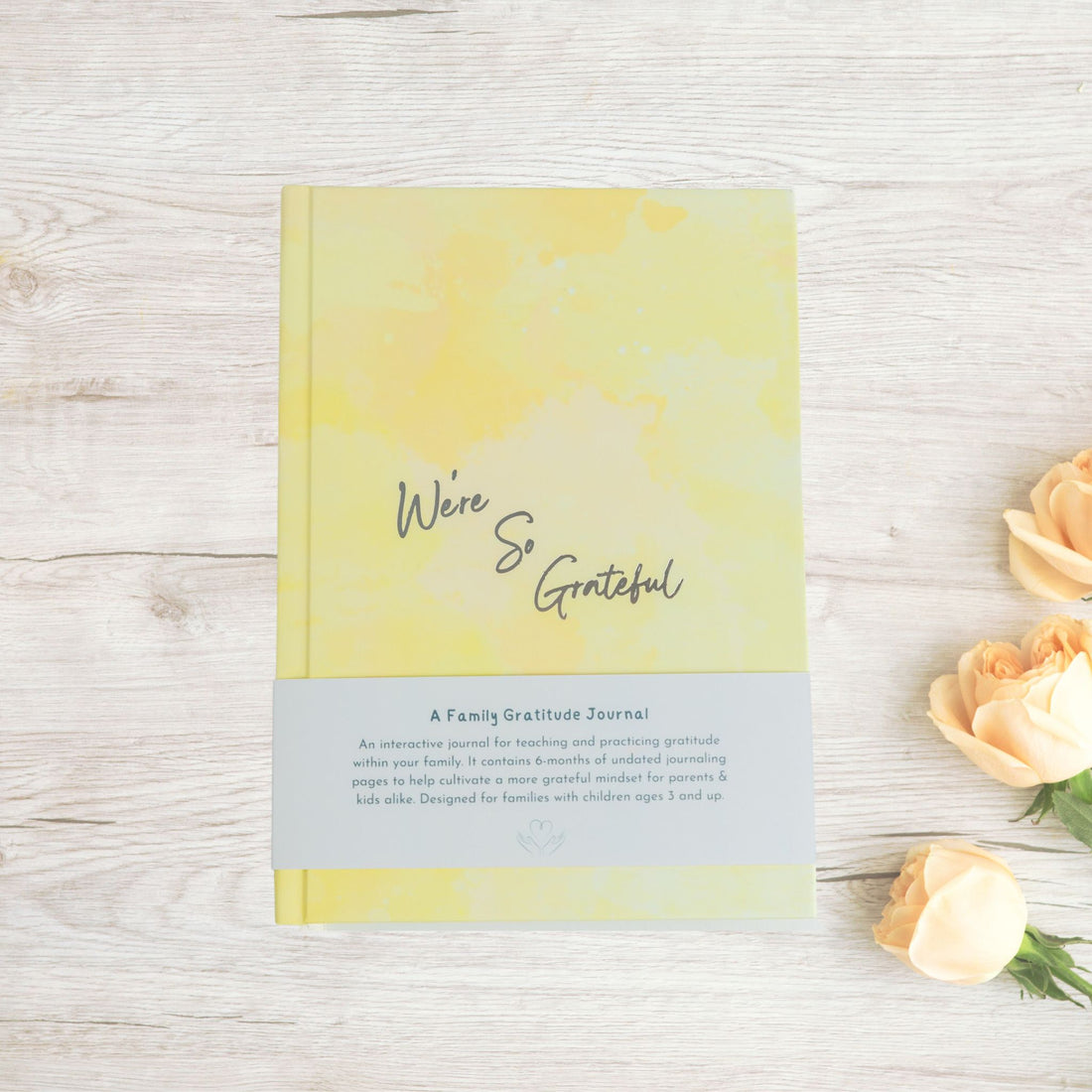
Our Family Gratitude Journal does exactly that. It's a tool that will help you and your family forge stronger bonds, cultivate gratitude and turn journaling into a unique family memory. And with options to write and draw on every page — it supports a variety of styles and methods to get your gratitude journaling in!
Check out our Family Gratitude Journal here and see why many families have replaced forced gratitude with genuine connection.
The bottom line: Gratitude isn't something you make your kids feel. It's something you help them notice. Start with one prompt from this list tonight. Not because you should, but because small shifts in attention create massive shifts in perception.
And that's a foundation that compounds for life.